How to Clean Up After a Kitchen Grease Fire (and When Not to Try)
By Buena Park Fire & Water Damage Pros 6 min read
Quick answer
Once the burner is off and the pan has cooled where it sits, put on gloves and an N95, take photos, then vacuum loose extinguisher powder with a HEPA-filtered vacuum before anything gets wet. Wash the greasy smoke film off the hood, cabinets and walls with a mild degreaser in small sections, rinse, and dry.
Before any cleanup: make sure the fire is really out
Cooking is the leading cause of home fires nationally, according to the NFPA, and most start on the stovetop. The risk is assuming the fire ended there. Grease vapor rises into the range hood, the over-range microwave and the cabinets beside it, and fire can smolder in any of them after the pan stops burning.
- Leave the pan where it is, lid on, burner off. Carrying hot oil to the sink is how a contained fire becomes a burn injury.
- Feel the cabinet faces and the hood with the back of your hand. Warmth, crackling or a hot-plastic smell means calling 911, even if no flame is visible.
- Smell for gas on a gas range. If you smell it, get everyone out and call SoCalGas or 911 from outside.
- Cut power to the range at the breaker if knobs, wiring or the over-range microwave look melted.
Calling the fire department after the flames are gone is not overreacting. OCFA in Buena Park and Los Angeles County Fire in Cerritos can check hoods and walls for hidden heat.
Protect yourself and photograph the kitchen first
Grease smoke and extinguisher powder are both fine particles. Wear nitrile gloves, an N95, eye protection and washable clothes. Keep children and pets out, and anyone with asthma or a heart or lung condition should stay elsewhere until you finish.
Before you wipe anything, photograph each wall, then the hood, ceiling and cabinet faces up close. If the damage proves bigger than it looks, an adjuster will want those pictures. Open windows and run a box fan blowing out, but leave the hood fan off if the hood was in the flames.
Throw out open food near the stove and anything in paper or plastic wrap close to the fire.
Removing fire extinguisher powder
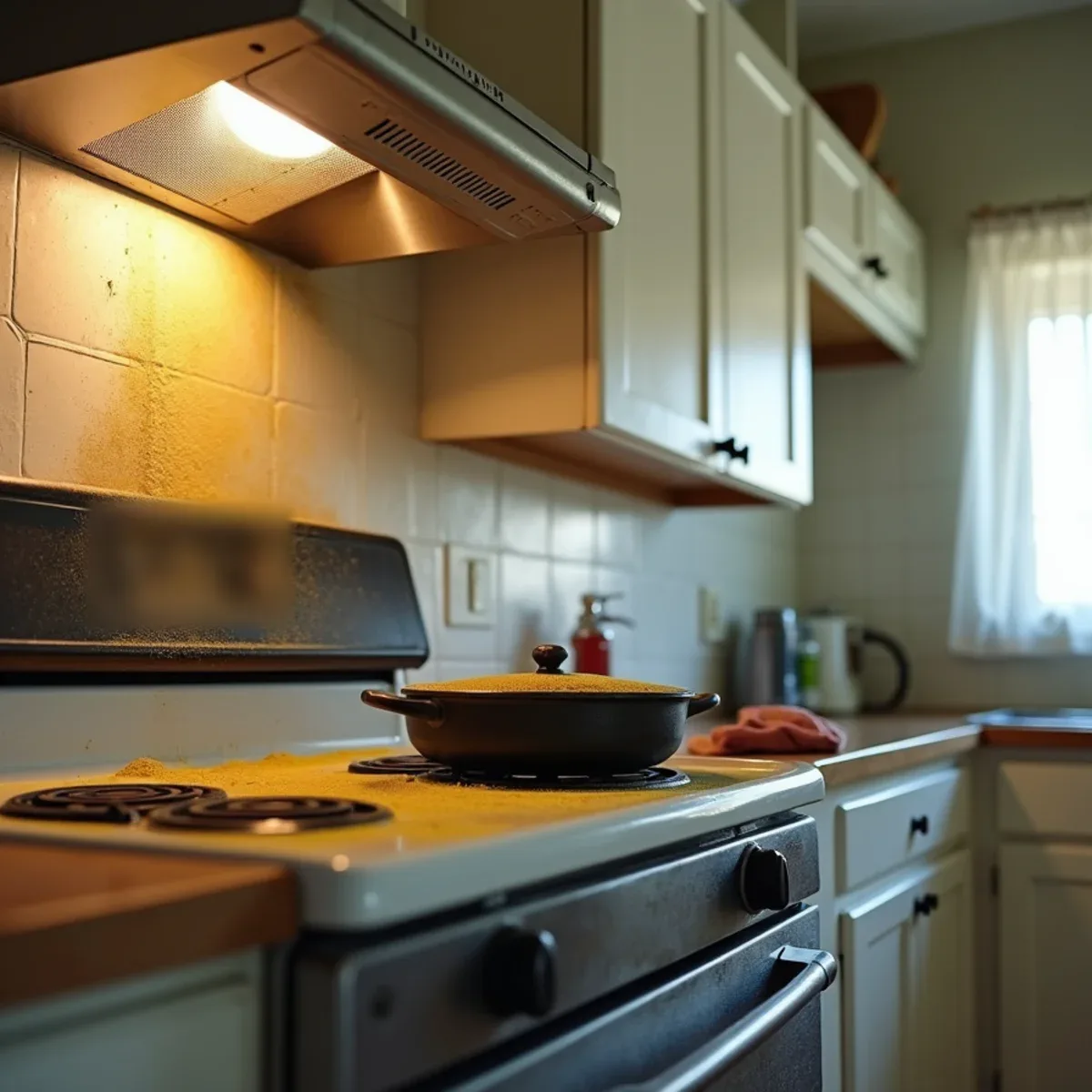
Most home extinguishers are the ABC dry chemical type, and the yellow powder is mostly monoammonium phosphate. Dry, it is a nuisance. Once it picks up moisture, it turns mildly corrosive to metal, so get it off the stove, hardware and appliances within a day or so.
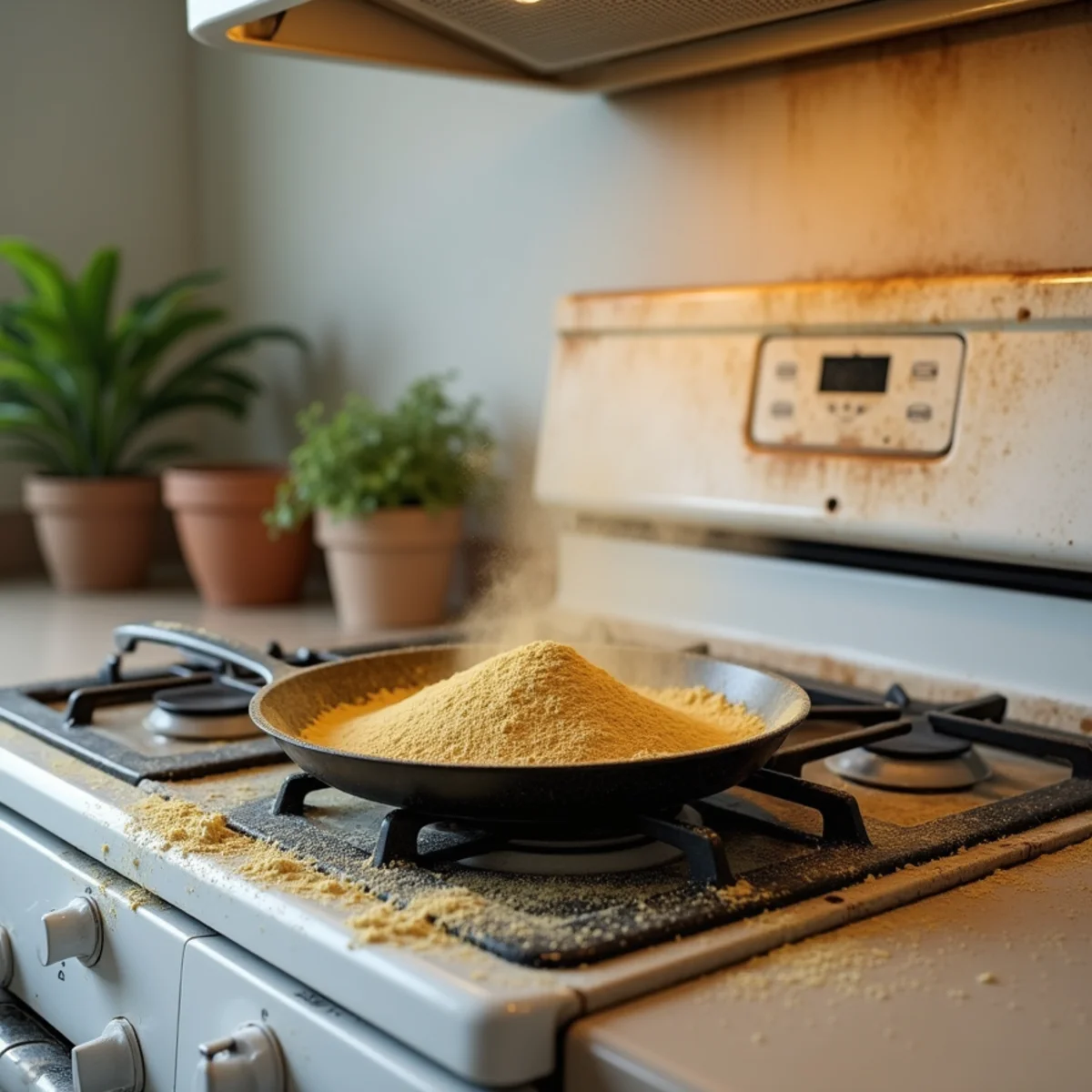
- Vacuum first, dry. Use a HEPA vacuum or a shop vac with a fine-dust HEPA filter. A regular household vacuum blows the finest powder back into the room.
- Wipe with warm water and a little dish soap, working in small sections and rinsing the cloth often.
- Rinse with clean water and dry right away, especially on stainless steel, hinges, drawer slides and the cooktop.
- Check hidden spots: knob stems, the gap behind the range and small-appliance vents.
Cleaning greasy smoke film off cabinets, walls and the hood
Burned oil and meat leave protein residue: a thin, yellowish, sticky film that is hard to see and easy to smell. Unlike dry black soot, it smears instead of dusting off, so it needs a degreaser. Our page on soot removal by surface covers the dry-soot side if you also have black marks.
The order that avoids streaks
- Start with the range hood. Soak metal mesh filters in hot water with a degreaser or run them through the dishwasher; replace charcoal filters outright.
- Clean the ceiling above the stove next, since that is where the heaviest film collects.
- Wash walls from the bottom up, so drips land on surfaces you have already cleaned rather than leaving tracks through the film.
- Do cabinet faces and the insides of any boxes that were open, then leave the doors open to air out.
Choosing a cleaner
Grease-cutting dish soap in warm water handles light film. For heavier buildup on painted walls, use a TSP substitute or mild alkaline degreaser and rinse afterward. Test on a hidden spot first. Varnished wood cabinets are the exception: a strong degreaser can strip the finish, so use a wood-safe cleaner and stop if it turns cloudy or tacky.
Wash curtains and dish towels, and replace the furnace filter, since the return vent pulled in smoke.
What not to do after a grease fire
- Don't spray water on a pan that is still hot. Water on burning or very hot oil flashes into steam and throws flaming grease.
- Don't mix cleaners. Bleach with ammonia or acids releases toxic gas.
- Don't paint over the stain. Grease film and smoke odor bleed through ordinary latex paint within weeks.
- Don't pull off cabinets, drywall or a popcorn ceiling in an older home before reading the asbestos note below.
What crews see after small grease fires: check which extinguisher you used
The label on the extinguisher changes the cleanup, and it is the first thing a crew asks about. Look at the letters on the canister before you start:
| Label | What sprays out | What it leaves | Cleanup notes |
|---|---|---|---|
| ABC (most home units) | Monoammonium phosphate dry powder | Fine yellow powder that turns mildly corrosive with moisture | Vacuum dry first; some manufacturers suggest a baking soda and warm water wipe before the final wash |
| BC | Sodium or potassium bicarbonate dry powder | White powder that cakes when it gets damp | Vacuum dry first, then wipe; a mild vinegar and water rinse is commonly recommended |
| K (commercial kitchens) | Wet chemical foam | A soapy film over the cooktop and hood | Hot soapy water, rinse and dry before the equipment is powered on |
Check the cleanup instructions on your extinguisher's label or the manufacturer's site before mixing anything, and never combine cleaners. Two more things crews notice on these calls:
- The range hood fan was left running. It pulled grease smoke into the hood duct and filters, where buildup is itself a fire risk. Replace the filters and have the duct checked.
- The dishwasher ran with powder inside. Powder that drifted onto open racks gets baked onto dishes and into the pump. Rinse dishes by hand first and wipe the door gasket before running a cycle.
If the smell is fading by the third day and nothing is sticky to the touch, the cleanup worked. If it is not, residue is somewhere you have not reached yet, usually the hood duct, the cabinet interiors or the HVAC return.
When not to try: signs the job needs a crew
Many small stove fires end with an afternoon of cleaning. These signs say yours will not:
| What you notice | Why it matters |
|---|---|
| Smoke smell in bedrooms or the hallway | Smoke rode the return air or the attic into rooms you will not think to wash |
| Charred or blistered cabinet, melted hood or microwave | Fire reached materials that usually need replacement, plus possible wiring damage |
| Film on the ceiling well beyond the kitchen | The cleanup area is now whole rooms, often with textured ceilings that resist washing |
| Smell back within a day or two of cleaning | Residue is inside porous material, insulation or ductwork |
| Powder spread through a large open-plan space | Corrosion risk on everything metal or electronic in the room |
House age matters too. In Buena Park, where the median home dates to 1965, the attic above the kitchen is usually open to the whole house, so a short fire can leave odor in every room. In Cerritos, largely built after 1967, kitchens often open into the family room, spreading film over more space than owners expect. See fire and smoke cleanup in Cerritos for more.
For anything on that list, a kitchen fire cleanup crew handles residue removal, cabinet and appliance decisions, and odor control together. Call (831) 303-1192 and you get the scope and price in writing before work starts, with photos for your insurance file. If the fire spread past the kitchen, start with our guide to the first 24 hours after a house fire.
The bottom line on grease fire cleanup
Throw out exposed food. Stop and call a pro if smoke reached other rooms, flames got into a cabinet, hood or wall, or the smell is still there after a few days. A small fire that stayed in the pan is usually a careful afternoon of work; anything past that is a job for kitchen fire cleanup, with residue on surfaces handled through soot removal.
In Buena Park and nearby cities, (831) 303-1192 is answered 24/7. Describe what burned and what the extinguisher hit, and you will hear honestly whether it is a homeowner job, with the scope and price in writing if it is not.
Related questions
How long does the smell from a grease fire last?
After thorough cleaning, a light grease smoke smell usually fades within a few days with good ventilation. If it is still strong after a week, or it comes back on warm afternoons, the residue is in something you have not cleaned: the attic, the ducts, carpet or the inside of cabinet boxes. That is a smoke odor removal job rather than more scrubbing.
Should I call the fire department if I already put the fire out?
Yes, if flames reached the hood, a cabinet or the over-range microwave, or you notice heat or a burning smell afterward. Firefighters can check for hidden fire, and the incident report helps with a later claim.
Is a small grease fire worth an insurance claim?
Most California homeowners and renters policies cover sudden fire and smoke damage, but your deductible decides whether a claim makes sense. Read your own policy. If smoke reached other rooms or cabinets need replacing, get a written scope and compare it to the deductible.