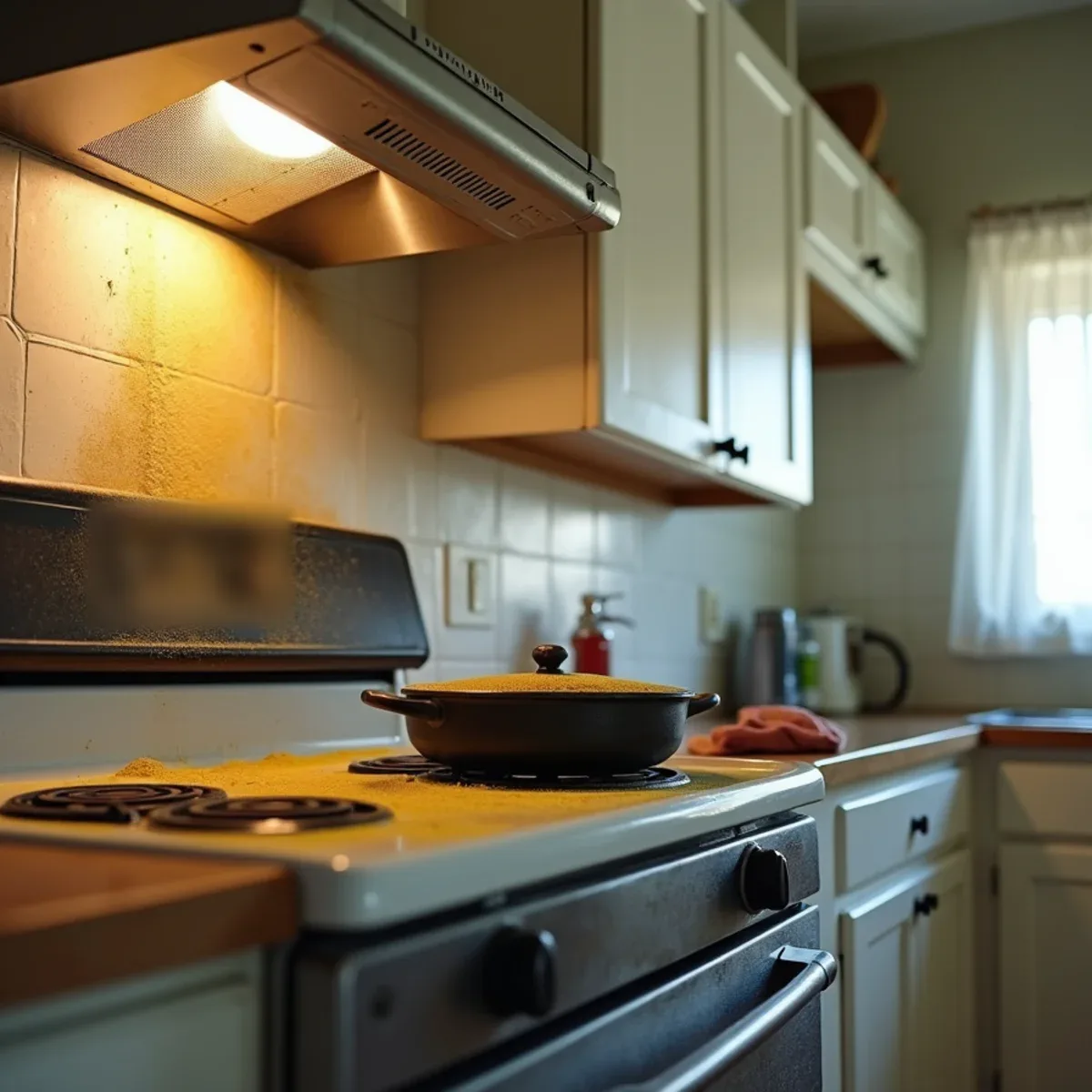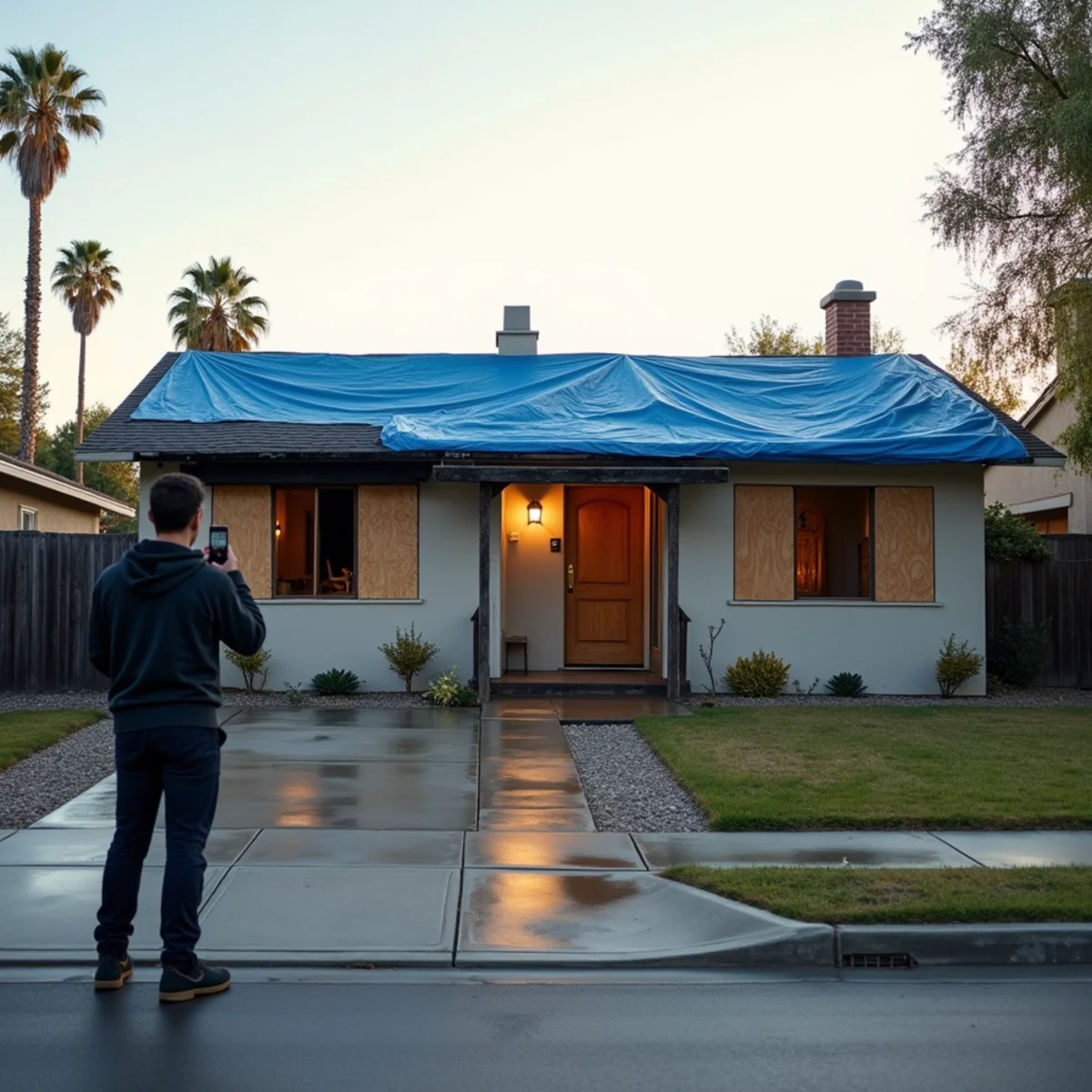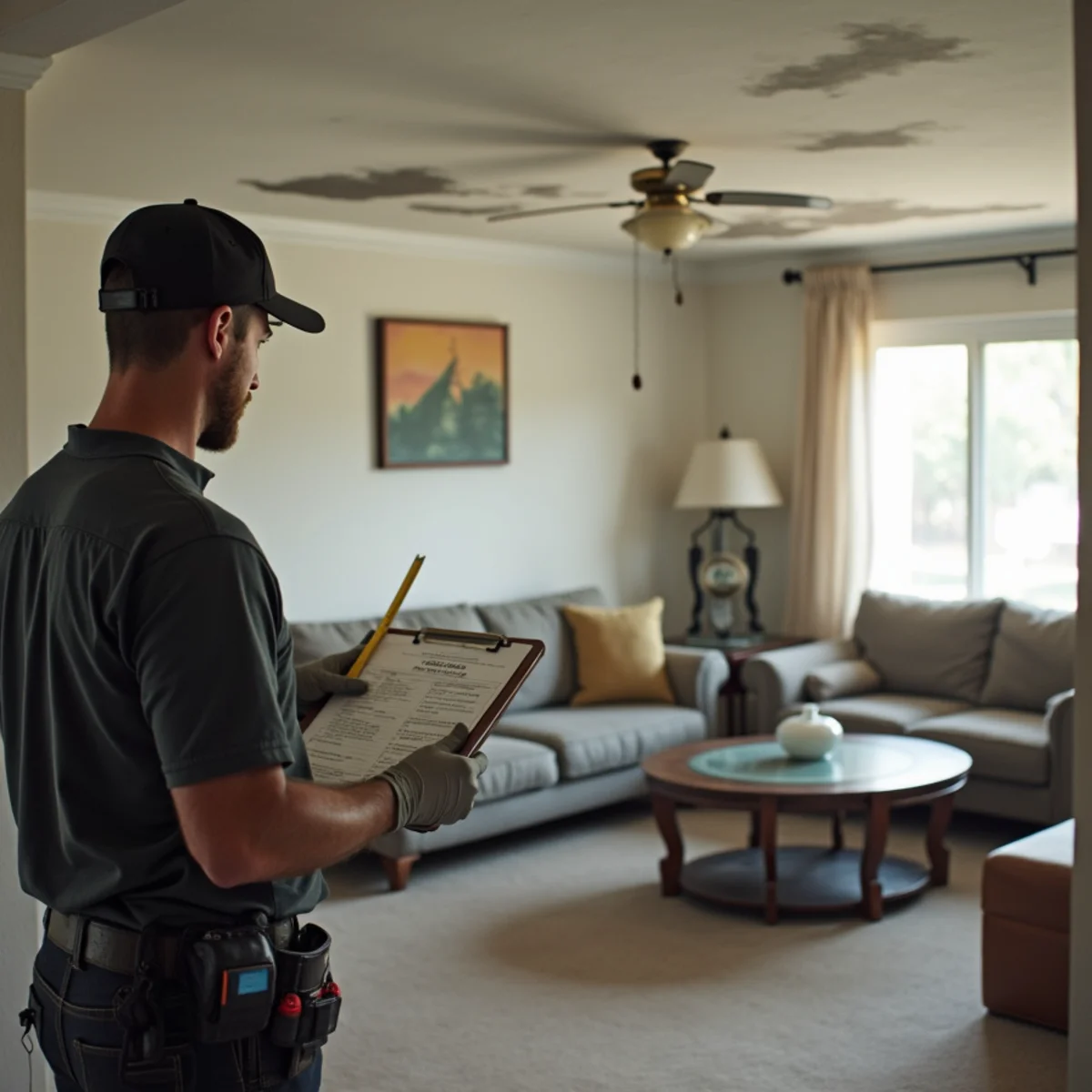
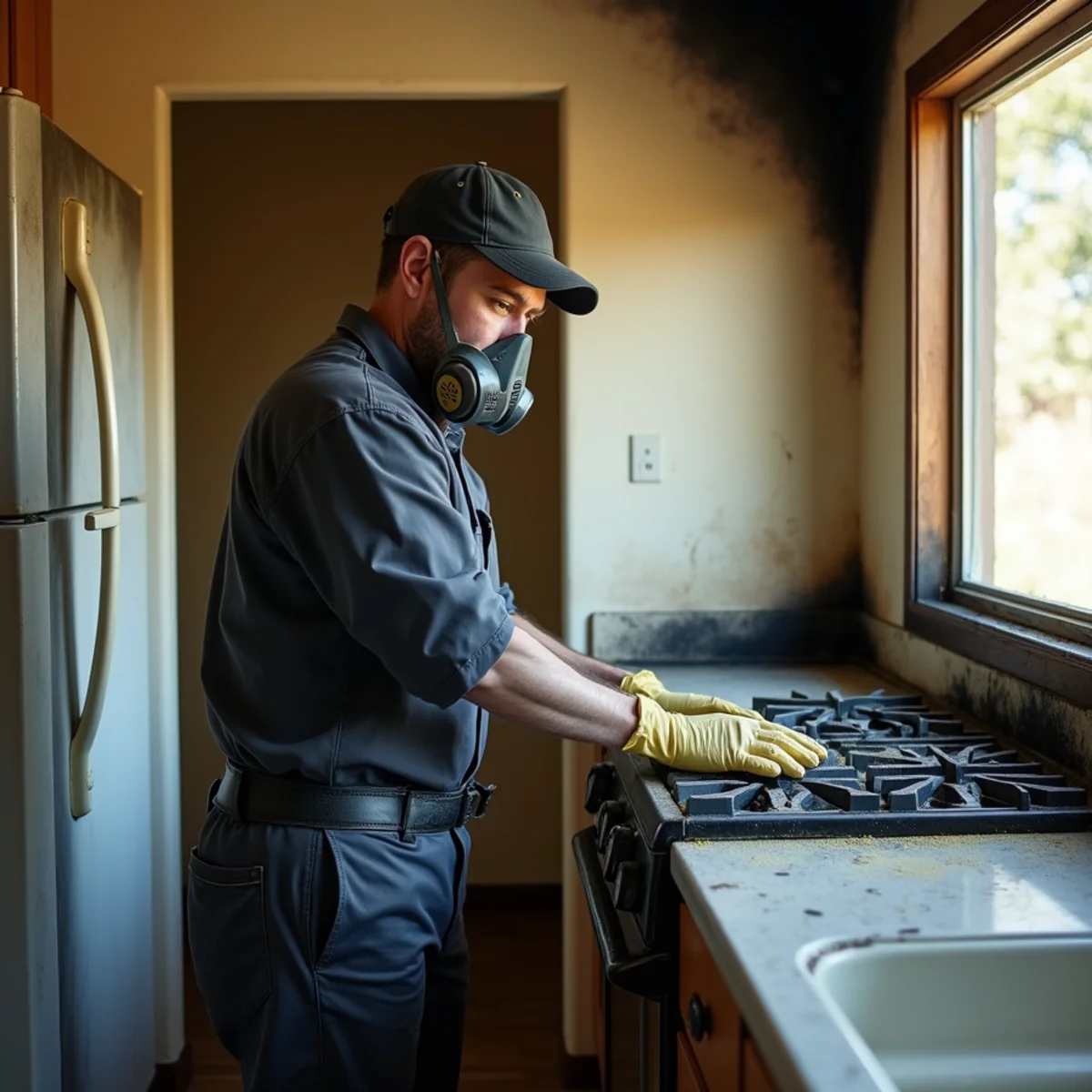
Most kitchen fires in Buena Park never make the news. A pan of oil flares, someone grabs the extinguisher, OCFA checks the house, and the flames never leave the stove. Then the family notices a burned smell in the bedrooms, a tacky film on the cabinets and yellow powder in every drawer.
Buena Park Fire & Water Damage Pros connects you with independent fire and smoke restoration contractors serving Buena Park and nearby cities. Call (831) 303-1192 any time, and get a written scope and price before any work starts.
Reviewed by the Buena Park Fire & Water Damage Pros team · Updated · Process references: ANSI/IICRC S700 practices, South Coast AQMD Rule 1403, CSLB contractor rules
The short answer
Kitchen fire cleanup means removing extinguisher powder before it corrodes metal, cutting the sticky protein film off cabinets, walls and ceilings with degreasers, checking the ducts and the attic above the stove for smoke, and deciding item by item whether cabinets, counters and appliances are cleaned, refinished or replaced. Odor treatment comes last.
After a kitchen fire: what to do in the first hour
If anything is still burning, get out and call 911. Once OCFA clears the house:
- Shut off the source. Turn the burner off and, on an electric range, its breaker. If the fire crew shut the gas at the meter, leave it for SoCalGas to restore.
- Switch the system off at the thermostat, with the fan on Auto. A running system pulls smoke into the return and pushes it through every duct.
- Open windows, but keep cabinets shut. Opening drawers spreads powder onto clean dishes.
- Do not wipe anything. A wet rag smears protein film into paint and turns extinguisher powder into paste.
- Photograph first: the stove, hood, ceiling and the rooms next door.
- Hold on to what burned. Keep the scorched microwave, pans and range until each is photographed with its brand and model label and your insurer has seen it or cleared it in writing.
- Keep vulnerable people out. Soot is fine particulate (PM2.5). Children, older adults, pregnant people and anyone with asthma or heart or lung conditions should stay away and follow their doctor's advice.
Hold off on sprays and scented plug-ins. Fragrance rides on top of protein odor while the film keeps releasing it. Ozone generators are a crew tool for rooms emptied of people, pets and plants, not a weekend rental.
If it really was just a pan, our guide on how to clean up after a kitchen grease fire covers what a homeowner can handle.
When you need kitchen fire cleanup instead of a wipe-down
Plenty of stovetop flare-ups end with a scrubbed pan and an open window. Call for professional cleanup when any of these is true:
- An extinguisher was discharged. The powder reaches the cabinet interiors, the hood fan and the gaps behind the range, and it starts corroding metal once it picks up moisture.
- Flames reached the hood, cabinets or ceiling. Scorched finishes, a warped hood or a stained ceiling mean heat damage on top of residue.
- The smell is still strong the next day, or it has shown up in bedrooms and closets. Protein odor in other rooms means it reached the attic or the ducts.
- A sticky film is back the day after you cleaned. Protein residue that comes back through a wipe needs alkaline degreasers and several passes.
- The fire involved an appliance's wiring or controls, such as a microwave or range panel. An electrician should clear the circuit before anything is plugged back in.
- The kitchen serves customers or tenants. Restaurants along Beach Boulevard and rental units need surfaces cleaned and documented before reopening or re-renting.
What kitchen fire cleanup includes
The written scope breaks the kitchen into items, so you can see what is cleaned, refinished or replaced. A full job usually covers:
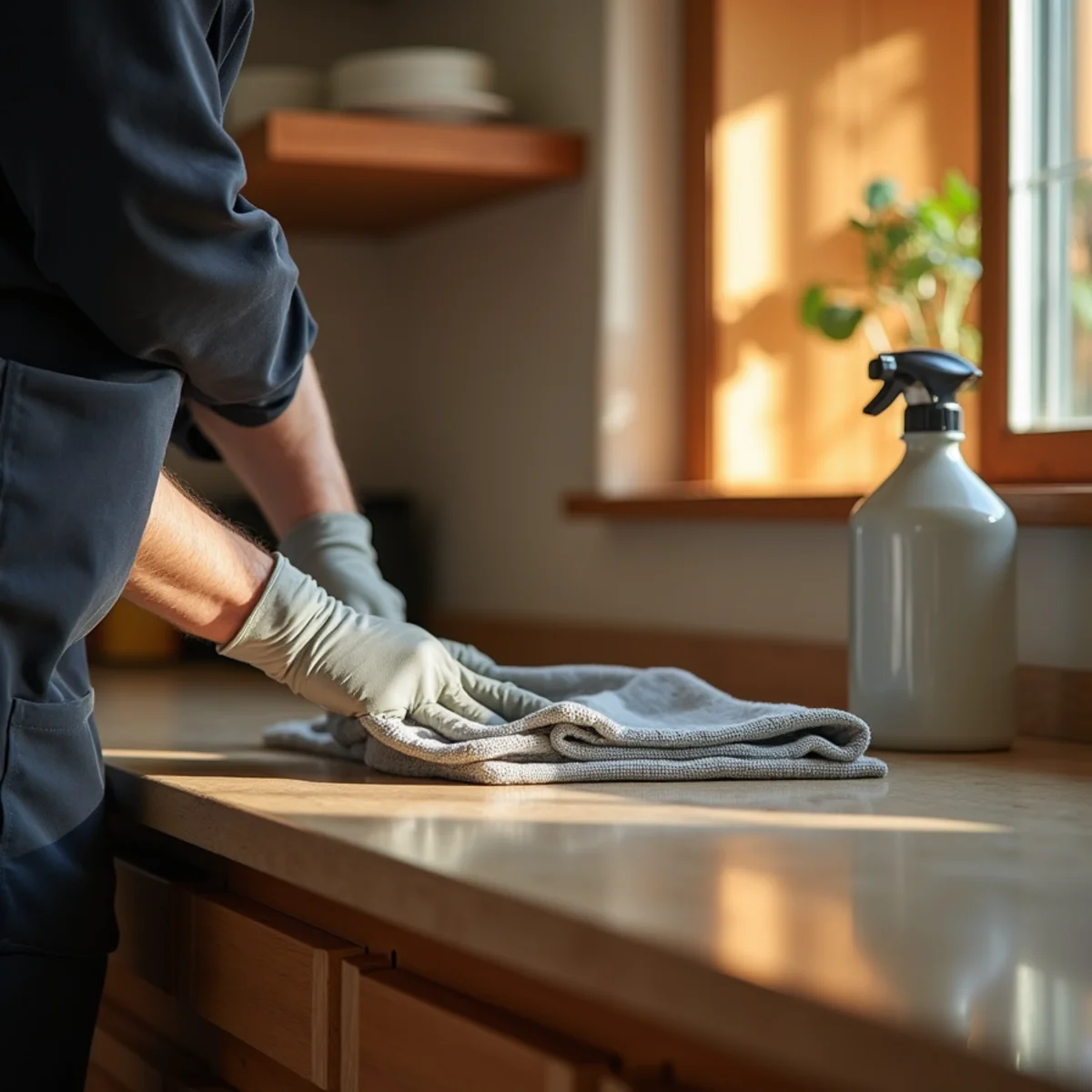
- Extinguisher powder removal: HEPA vacuuming of counters, drawers, the hood and behind the range, then damp wiping of metal before it corrodes.
- Degreasing of cabinet fronts and interiors, walls, the ceiling and light fixtures to remove protein and grease film.
- Range hood and fan: filters replaced, the hood degreased, and the duct above it checked for grease and soot.
- Appliances: stainless steel and enamel surfaces cleaned, with damaged units photographed and listed for the adjuster rather than thrown out.
- Food-contact surfaces such as counters, sinks and shelves cleaned and sanitized after degreasing, once exposed food has been discarded.
- Dishes, cookware and small items cleaned on site or sent to contents cleaning.
- HVAC filter and returns checked, and the attic above the kitchen evaluated for smoke.
- Odor treatment and sealing primer before any paint or refinishing.
Protein smoke: the near-invisible residue and the smell it leaves
Burned meat, oil and grease produce protein smoke. Instead of black soot it leaves a thin, sticky film, amber or nearly clear, so the kitchen looks fine and smells terrible. The film coats closed cabinet interiors and the ceiling, soaks into flat paint and cabinet finishes, and yellows both over time.
Why it takes more than one pass
- Plain water smears it. Crews use alkaline degreasers or enzyme cleaners, one section at a time.
- Where plastic or packaging also burned, dry soot sponges go first so the wet step does not grind soot in.
- Curtains, cushions and dish towels hold the odor and are laundered separately.
- After cleaning comes odor work: hydroxyl or thermal fogging, then an odor-blocking primer. See smoke odor removal for how each method works.
Fire extinguisher powder: why it has to come off quickly
Most home extinguishers are ABC dry chemical units filled mostly with monoammonium phosphate. One discharge coats the stovetop, counters and range hood in fine yellow dust. Once it picks up moisture from humid air or cooking steam, it turns mildly corrosive to bare metal, hinges and electronics, and works deeper into seams the longer it sits.
- HEPA-vacuum the loose powder dry, with the power off.
- Wipe with a damp cloth and mild cleaner only after the bulk is gone.
- Evaluate electronics. Powder inside a microwave or range control panel can cause trouble later.
Cabinets, counters and appliances: clean, refinish or replace
Each item is judged on its material and how close it sat to the heat.
| Item | Usually cleaned | Refinished or replaced when |
|---|---|---|
| Solid wood cabinets (original 1960s kitchens) | Film only, finish intact | Finish blistered: refinish. Charred or warped: replace |
| Thermofoil or particleboard cabinets | Light film | Bubbled, peeling or swollen; these rarely refinish well |
| Laminate counters | Residue only | Blistered or scorched near the range |
| Stone and tile counters | Most of the time | Quartz discolored by heat, or cracks |
| Over-range microwave and hood | Smoke on the outside only | Flame or powder got inside; often the first loss |
| Range, refrigerator, dishwasher | Controls work, gaskets hold no odor | Heat-damaged controls, or gaskets that keep the smell |
Dishes and cookware almost always clean up. Matching matters: two new doors in a run of 1960s cabinets rarely match, so the scope should say whether the run is refinished as a set. New cabinets, framing or wiring move the job to fire damage reconstruction.
Smoke that traveled: ducts, adjoining rooms and the attic above the kitchen
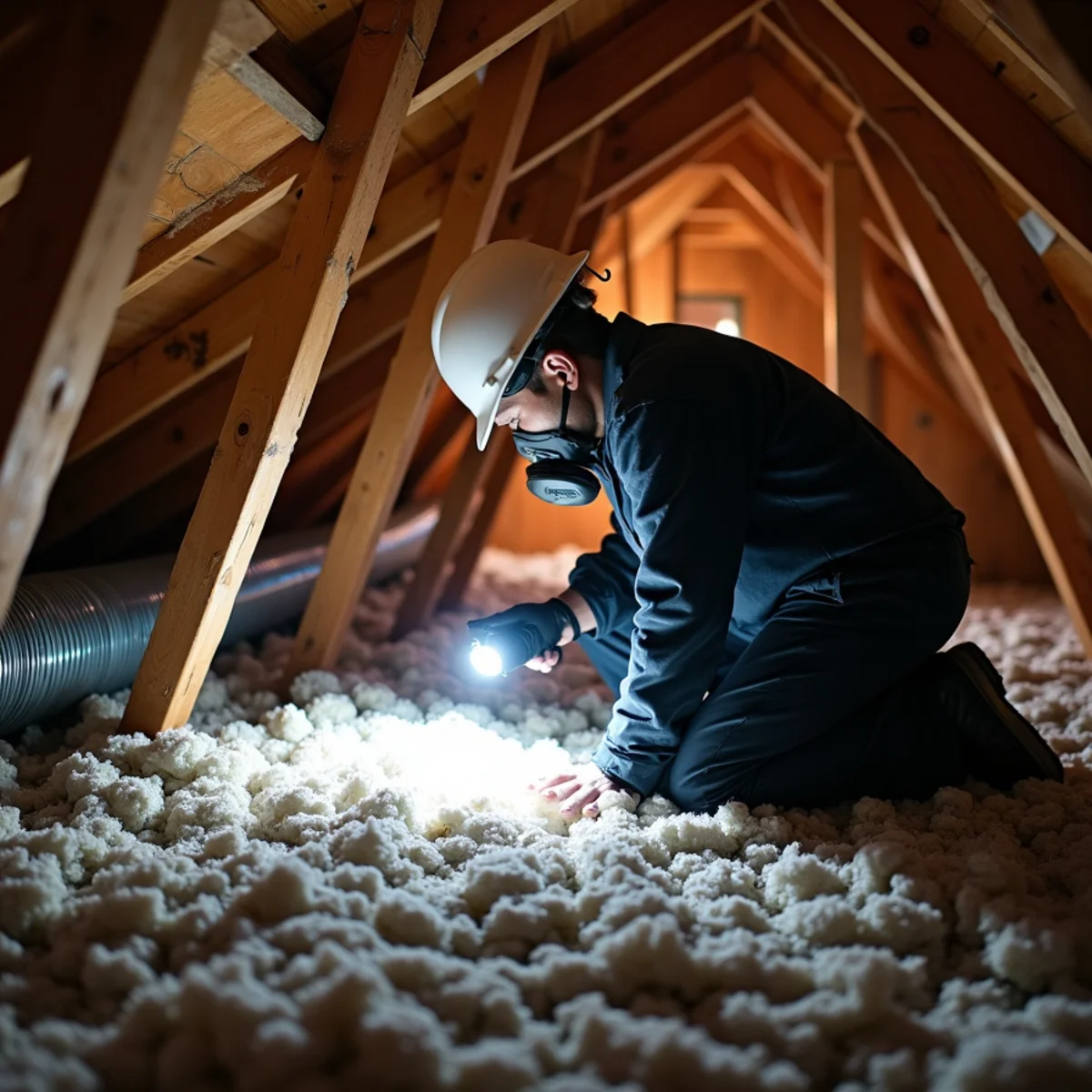
In a Buena Park ranch home, where the median house dates to 1965 and one open attic spans the whole single story, kitchen smoke rises through recessed lights, the attic hatch and gaps around pipes. It settles in the insulation and comes back down through ceiling registers, which is how a pan fire leaves the far bedroom smelling burned.
- Attic insulation above the kitchen. Insulation that smells or shows a gray or yellow surface layer is usually replaced, not cleaned.
- Ducts and the air handler. Ducts here usually run through the attic. If the system ran during the fire, the return, filter and ducts are inspected.
- Adjoining rooms. Open kitchen and family room layouts share smoke, so those ceilings need the same cleaning.
Start with the filter and the returns
The HVAC filter is the quickest read on smoke migration. An amber, tacky or burned-smelling filter means the return pulled protein residue into the ducts; a clean filter in a system that never ran narrows the job. Either way, the return grille, the return duct nearest the kitchen and the far-room registers are checked for film before a new filter goes in.
Apartment and condo kitchens
Nearly half of Buena Park homes are rented, many in two-story apartment blocks and condos where units share walls. Smoke from one stove can move through those walls, plumbing chases and a common attic into the unit next door. Tell the property manager in writing and ask that neighboring units be checked too. Our guide for renters and landlords after an apartment fire covers who handles what.
When smoke reached several rooms, the job becomes building-wide smoke damage cleanup, and the scope should say so.
What affects the price of kitchen fire cleanup
A pan fire and a fire that climbed into the cabinets are different jobs. After the walkthrough, the written price reflects:
- Whether an extinguisher was used, and how far the powder spread into cabinets, drawers and appliances.
- The residue mix. Protein film alone, or protein plus oily soot from a burned plastic container or cutting board.
- Cabinet material and finish. Solid wood can often be cleaned and refinished; particleboard boxes swollen by hose water are replaced.
- How far the smoke traveled: the hood duct, the attic insulation above the kitchen, the HVAC and the family room next door.
- Testing before tear-out. Older kitchens may need an asbestos survey or lead check before flooring, drywall or a backsplash comes out.
- Repair scope. Cleaning only, or new drywall, cabinets, counters and electrical work by licensed contractors.
Your deductible matters too. Compare it with the itemized scope before you decide whether to file, and see the published ranges in our Orange County fire restoration cost guide.
Small kitchen fires and insurance: claim or pay out of pocket
Most California homeowners and renters policies cover sudden fire and smoke damage, but not every small fire is worth a claim. Read your policy and weigh:
- Deductible against the real scope. Compare it with the written scope, not the damage visible from the doorway.
- Claim history. Insurers share claim records through industry databases and check them at renewal. In California's tight insurance market, ask your agent how a claim would affect your renewal.
- Loss of use. If the kitchen is out for weeks, additional living expenses (often Coverage D) may matter more than the repair.
- Prompt notice. Policies expect losses reported promptly, so if you may claim, tell your insurer early.
- What you can prove. Dated photos of the kitchen and nearby rooms, the damaged items you kept, and receipts for takeout or a hotel night. Gather them before you decide.
- Who does the work. Filing does not hand the job to the insurer's preferred vendor. Under 10 CCR 2695.9, part of California's Fair Claims Settlement Practices Regulations, the pick is yours, and an insurer that suggests a company has to put your right to choose in writing.
Crews provide photo documentation and an itemized scope, and can meet the adjuster on site if you file. Negotiating the claim stays with you, or a licensed public adjuster you hire. Call (831) 303-1192 to set up a visit.
Kitchens in 1950s and 1960s Buena Park homes: asbestos and lead checks before demolition
Roughly 57% of Buena Park homes date from the 1940s to the 1960s, and many kitchens hide original sheet vinyl, black tile adhesive, joint compound or popcorn ceilings. Any can contain asbestos.
South Coast AQMD Rule 1403 requires an asbestos survey before renovation or demolition, whatever the building's age. The single-family exception covers under 100 square feet, and a 10 by 12 foot kitchen ceiling alone is 120. In homes built before 1978, sanding or cutting painted cabinets and trim falls under the EPA Renovation, Repair and Painting (RRP) rule.
From cleanup to a working kitchen: the repair sequence
- Document. Photos, the written scope, and exposed food bagged and removed.
- Powder and debris out, after charred items are photographed.
- Survey and testing before drywall, flooring or ceiling material is disturbed.
- Cleaning and selective tear-out of what cannot be saved.
- Attic and ducts cleaned, or insulation replaced.
- Odor treatment and sealing before paint.
- Repairs. An electrician checks circuits near the fire, then drywall, cabinets and appliances go in, by licensed contractors where permits apply.
- Final walk-through against the scope.
A clean-only job can wrap up in days. Every fire restoration crew we send is licensed where California requires it, and insured. The same crews handle kitchen fire cleanup in La Palma, smoke and fire cleanup in La Mirada and kitchen fire cleanup in Cerritos. See every fire and smoke service area near Buena Park.
Why Buena Park calls Fire & Water Damage Pros for kitchen fire cleanup
Powder off before it corrodes
Crews start with extinguisher residue on metal and electronics, because that is the damage that keeps growing after the fire is out.
Protein film treated as its own problem
Degreasers, several passes and odor sealing are written into the scope, not discovered after the first coat of paint peels.
Honest advice on small fires
If a homeowner cleanup will do, the person who answers (831) 303-1192 says so, and the written scope helps you weigh a claim against your deductible.
From cleanup to a working kitchen
Cleaning, testing and repairs follow one written sequence, with rebuild work by licensed contractors where permits apply.
Every fire restoration crew we send is licensed where California requires it, and insured.
Kitchen Fire Cleanup: common questions from Buena Park
Can I clean up a small grease fire myself?
Sometimes. If the flames stayed in the pan and the smell fades after a day of airing out, vacuum the powder first, then degrease and rinse. Get help if smoke stained the ceiling, the smell reached other rooms, the system was running, or the microwave or hood took flame.
Why does my whole house smell after a small stove fire?
Protein smoke carries heavy odor and little visible soot. In a ranch home it rises into the open attic and ducts, then returns through registers in every room. The film on walls, fabrics and insulation keeps releasing smell, especially on warm days, until it is removed.
Is food in the kitchen safe to eat after a fire?
Federal food-safety guidance says to discard food exposed to heat, smoke, soot or firefighting chemicals, including open packages and often refrigerator contents, since door seals are not airtight. Cans near the heat should go too. Photograph what you discard.
Should I file an insurance claim for a small kitchen fire?
Compare the written scope with your deductible, ask how a claim affects your renewal, and consider living expenses while the kitchen is out. Get the damage scoped first, since hidden smoke often enlarges a small job, and notify your insurer promptly if you may claim.
Can I just paint over smoke-stained kitchen cabinets?
Not until the protein film is gone. Paint and lacquer do not bond to a greasy residue, so the new finish peels or stays tacky and the odor works back through it. Cabinet boxes are degreased inside and out, the hood and the wall behind the range are cleaned, and any scorched framing is sealed with an odor-blocking primer before a topcoat goes on.
What should I photograph after a kitchen fire for an insurance claim?
Go wide first, then close: each kitchen wall, the ceiling above the stove, the inside of the cabinets and the range hood, then every appliance with its brand and model label. Add the hallway, the family room and any room with a smell or a film. Keep the original files with their dates, and photograph items before anything is thrown out.
Kitchen Fire Cleanup beyond Buena Park
The same crews cover the cities around Buena Park, 5 to 20 minutes out by I-5, SR-91 and Beach Boulevard. See how kitchen fire cleanup works in the housing stock of each city, or view all fire restoration service areas.