Call (831) 303-1192 as soon as the fire department releases your Buena Park property, and a live person will line up the nearest available crew to board up broken windows and doors, tarp the roof and start removing hose water on that first visit. Most insurance policies expect you to protect the house from further damage right away.
Buena Park Fire & Water Damage Pros answers 24/7 and connects you with independent fire restoration crews who work nights, weekends and holidays. The price for the emergency work is in writing before anyone cuts plywood, and every opening is photographed for your claim.
Reviewed by the Buena Park Fire & Water Damage Pros team · Updated · Process references: ANSI/IICRC S700 practices, South Coast AQMD Rule 1403, CSLB contractor rules
The short answer
Emergency board-up after a fire means covering broken windows, forced doors and ventilation holes with plywood, tarping any opening in the roof, and starting extraction of firefighting water on the same visit. It keeps out rain, intruders and animals, protects your claim, and meets the policy duty to prevent further damage. Call (831) 303-1192 at any hour.
The fire is out: what to do in the first hours
Once the engines leave, work through these steps in order, and skip anything that puts you back inside an unsafe structure.
- Stay out until you are told it is safe. A weakened ceiling or damaged wiring is not visible from the doorway.
- Leave the utilities as firefighters left them. If gas or power was shut off, the utility or a licensed electrician restores it.
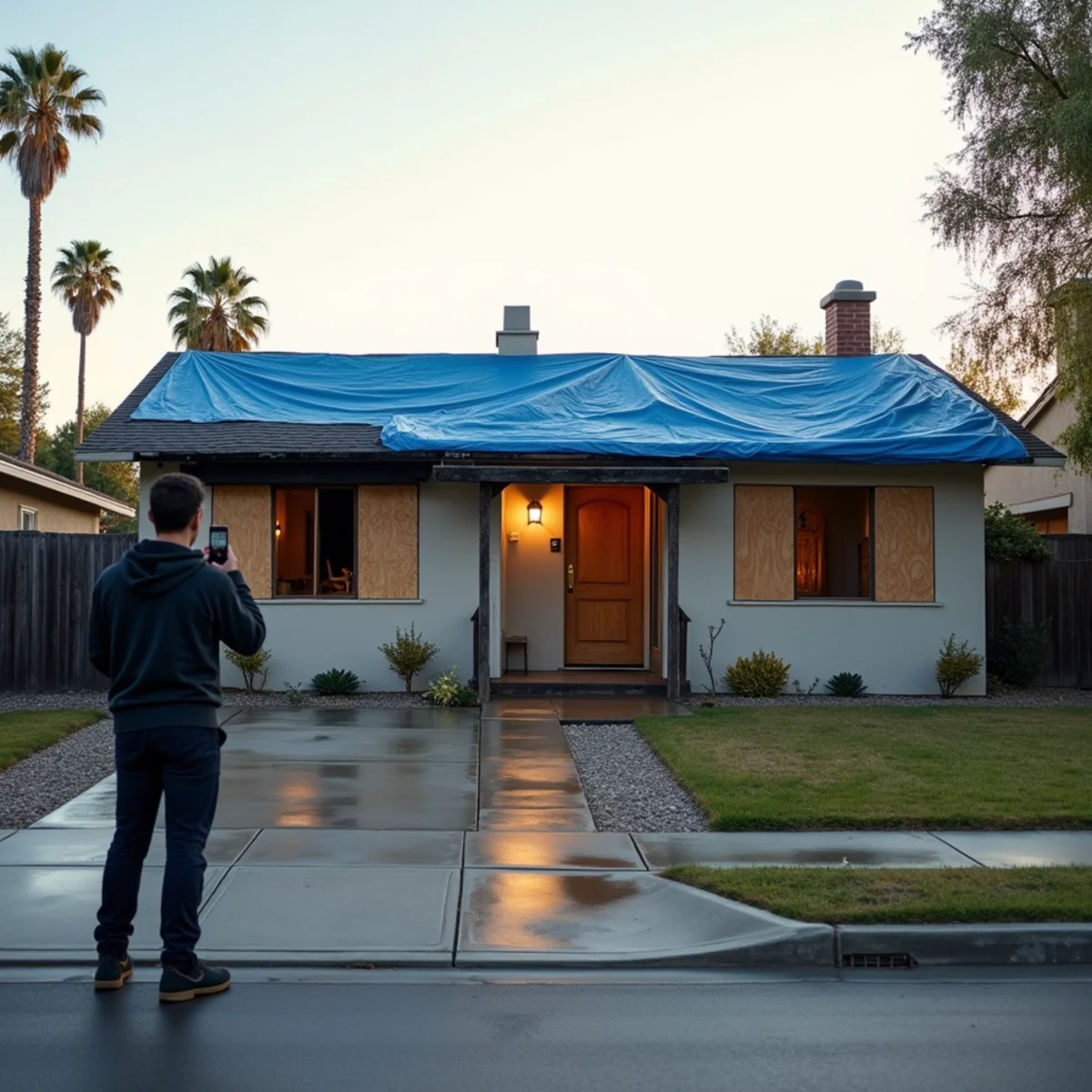
- Photograph from outside. Every side of the house, each broken opening, and the roof if you can see it.
- Get a claim number from your insurer. You do not need an adjuster on site before the house is secured.
- Call {PHONE} for board-up and tarping. One call covers plywood, the roof cover and water extraction.
- Keep every receipt for hotels, meals and clothing; many policies pay additional living expenses.
Our guide to the first 24 hours after a house fire covers the next day.
Board-up: windows, doors and openings cut by firefighters
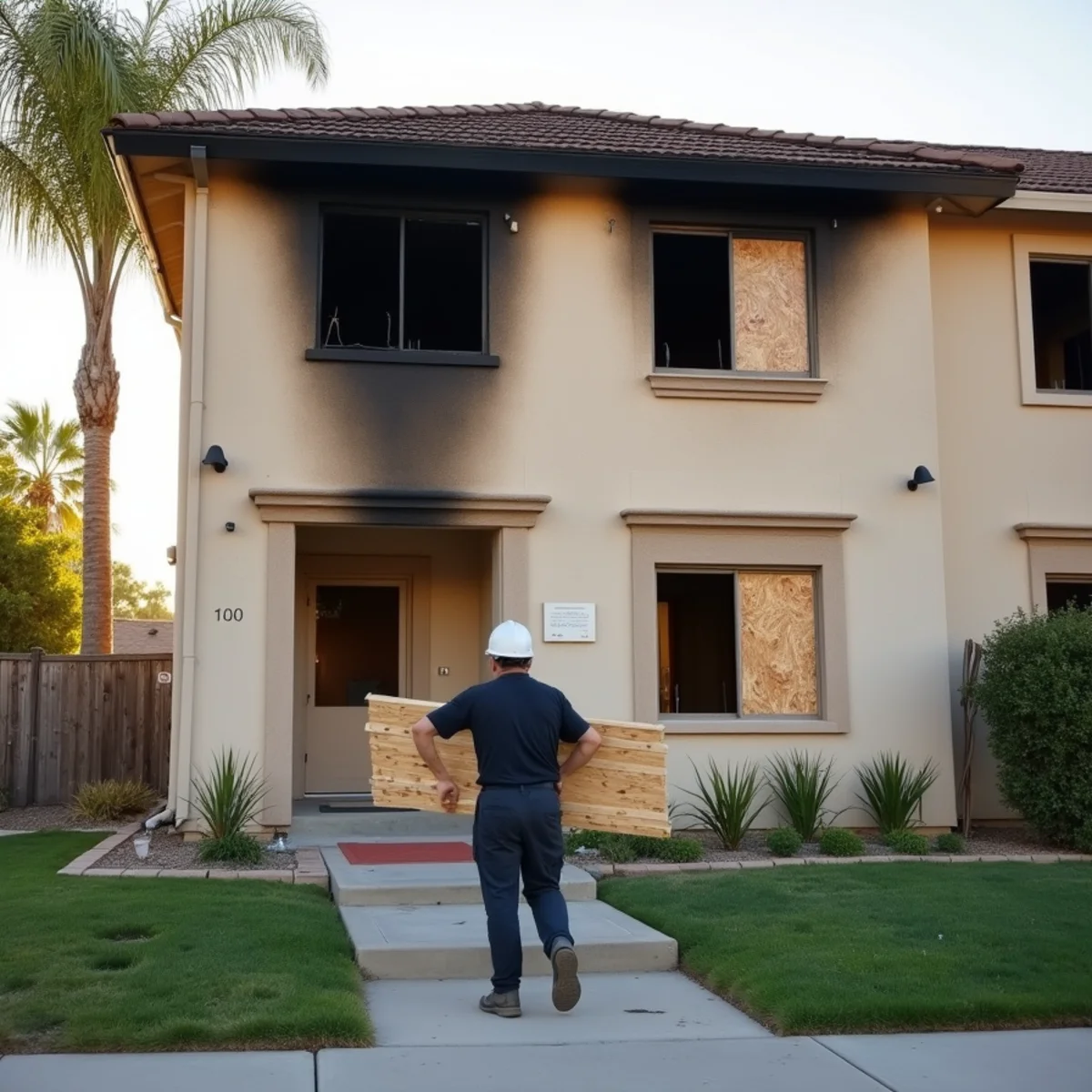
Firefighters break glass and force doors on purpose to let heat and smoke out. On a Buena Park ranch home that can mean several bedroom windows, the backyard slider and the door from the attached garage.
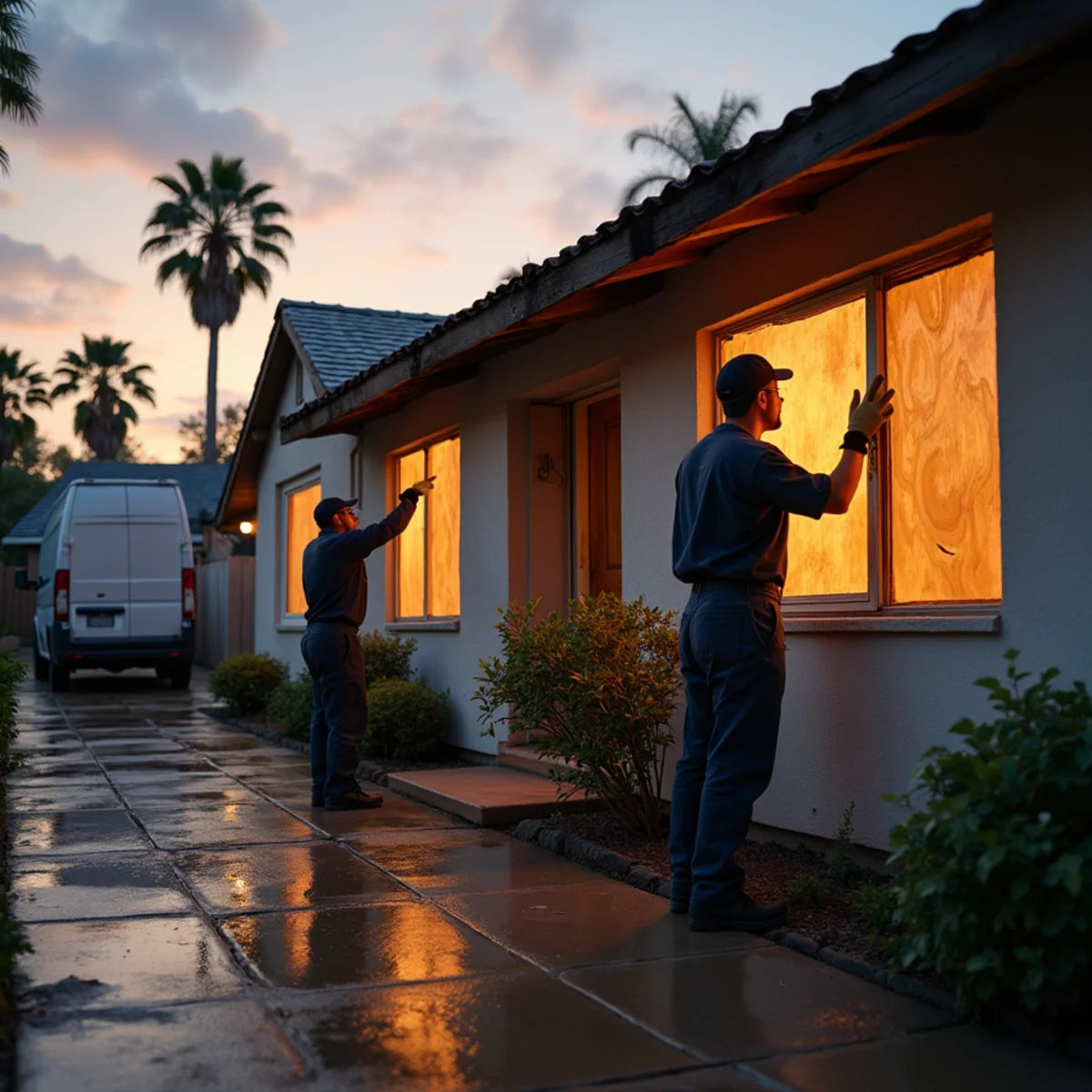
- Exterior-grade plywood cut to each opening and fastened into the framing, not just to the stucco.
- Larger openings braced from inside with 2x4s bolted through the plywood, so boards cannot be pried off.
- One door set up as a lockable entry with a hasp and padlock for you, the adjuster and later crews.
- Broken glass cleared from frames, sills and the ground below.
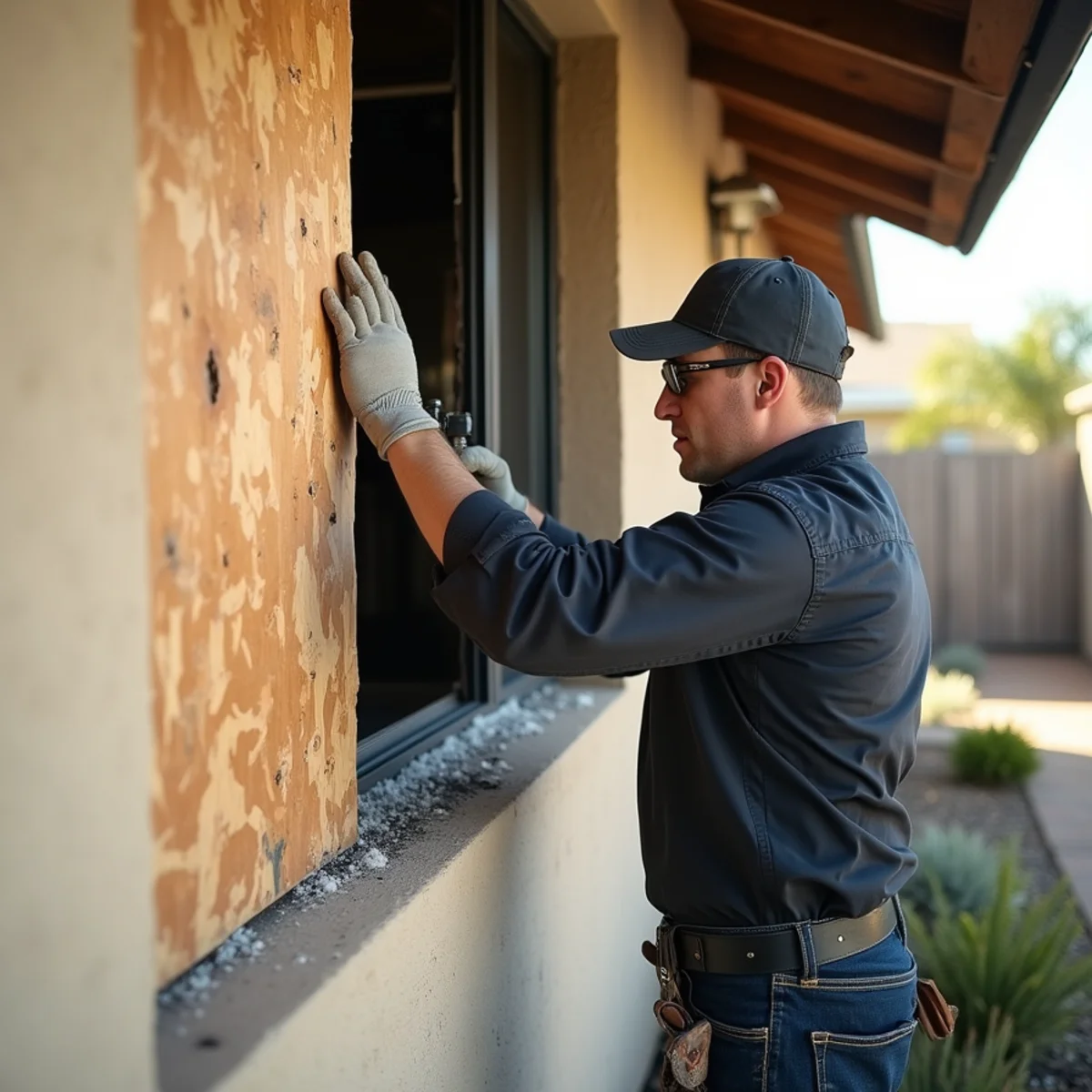
Board-up is temporary. It holds until fire damage reconstruction replaces the windows, doors and frames.
Boarded up is not the same as safe to live in
Plywood and a tarp protect the building; they do not clear it for occupancy. Power and gas still come back only through the utility or a licensed electrician, soot still coats the rooms, and nobody has checked the framing above the burned room. Board-up holds the house in place while the real scope is written. It is not the first day of the rebuild.
Apartments, hotels and restaurants on Beach Boulevard
Along Beach Blvd, through the Entertainment Zone near Knott's Berry Farm and the Koreatown stretch toward Rosecrans, a fire often hits a building with many occupants. The owner or property manager authorizes board-up of the structure, and the crew lists each unit's openings separately so every tenant and insurer sees what was covered. Tenants call about their own unit and belongings; see apartment fires for renters and landlords.
Roof tarping after ventilation cuts or burn-through
When fire reaches the attic, crews often cut a hole in the roof to vent it, or the flames burn through on their own. Most ranch homes here have one open attic over every room, so the next rain or sprinkler cycle can run along the ceiling joists and stain rooms the fire never touched.
- A heavy polyethylene tarp extending well past the opening, run over the ridge where possible so water sheds off.
- Edges wrapped around wood battens and screwed down, not weighted with bricks that slide off in a Santa Ana wind.
- Decking checked from a ladder first, because a fire-thinned roof can give way.
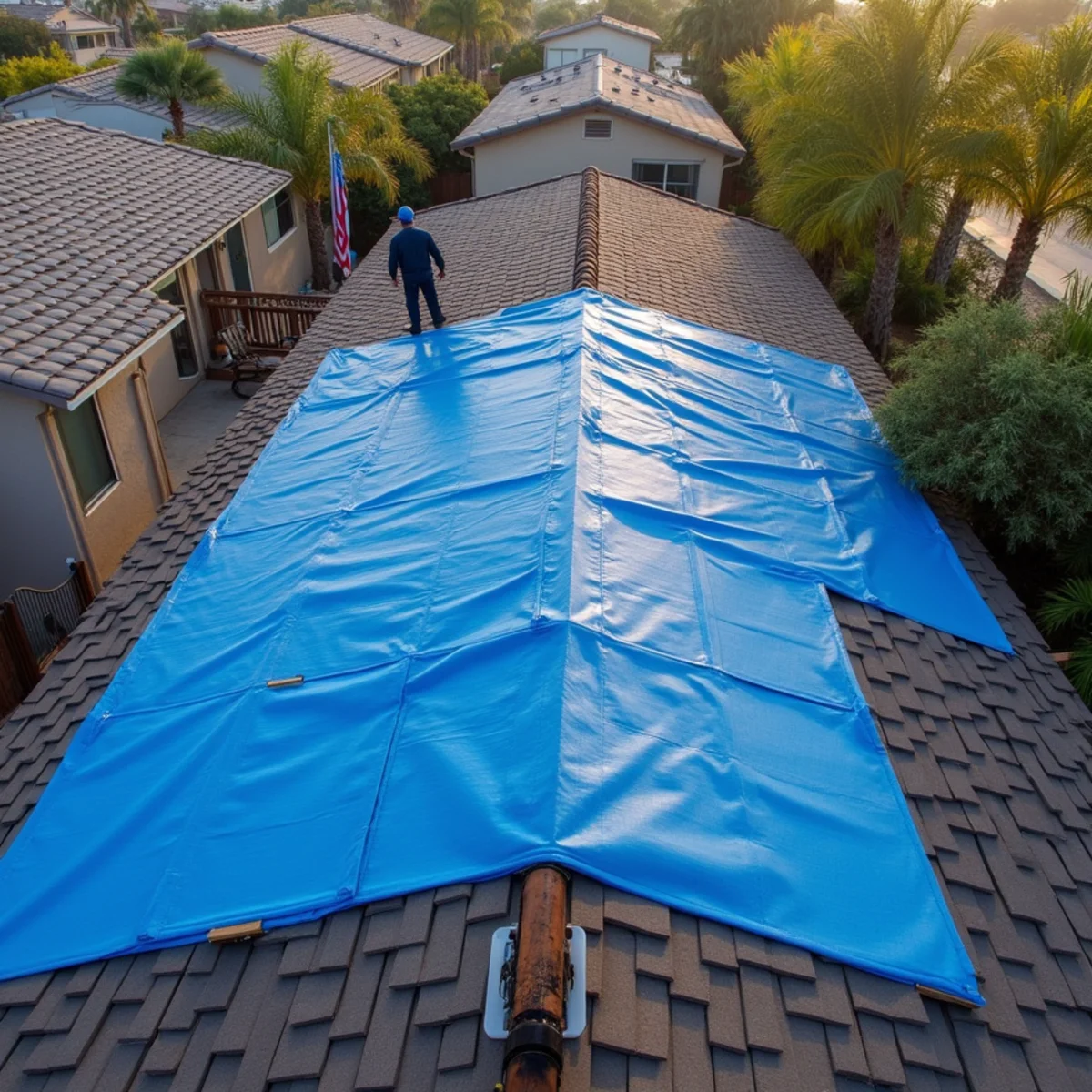
If the roof is intact, the crew should say there is nothing to tarp.
Santa Ana wind season and an open house
From about October through April, Santa Ana winds push hard across north Orange County. A gust through a broken bedroom window can carry ash, embers and yard debris into rooms that only had light smoke, and wind gets under any tarp edge that is not battened and screwed down. One rain on loose soot turns it into a smeared residue that takes far longer to clean. That is why every opening gets covered on the first visit, in any season, not when the forecast turns.
What emergency board-up and tarping includes
The first visit is about closing the building to weather, animals and anyone who should not be inside, and stopping the water from doing more damage. The written scope for that visit typically lists:
- An exterior walk with you or the property manager, photographing every broken window, forced door and roof opening before anything is covered.
- Plywood board-up of each opening, cut to size and fastened into framing, with bracing on large openings.
- One secured entry with a padlock, so you, the adjuster and later crews can get in without removing boards.
- Roof tarping over ventilation cuts or burn-through, battened at the edges, after the decking is checked.
- Glass and debris cleanup around the openings and walkways so the property is safe to approach.
- Water extraction and drying setup for hose water in carpet, insulation and drywall, once power is safe.
- Storefronts and multi-unit buildings: boarded openings listed by unit or suite, so the owner, tenants and each insurer can see what was secured.
- A written record of the work with before and after photos, your claim number on the invoice, and notes on what comes next.
Water from fire hoses: extraction and drying started on the same visit
A single hose line can put hundreds of gallons into a house in minutes. The result is soaked carpet, wet drywall, water above the ceilings and puddles on the slab, often in rooms the fire never reached. That water is part of the fire job, so the board-up visit also covers:
- Extracting standing water from carpet and hard floors.
- Pulling soaked carpet pad and ceiling insulation that cannot be dried.
- Checking drywall with a moisture meter to see how high water wicked.
- Setting air movers and dehumidifiers once power is safe to use.
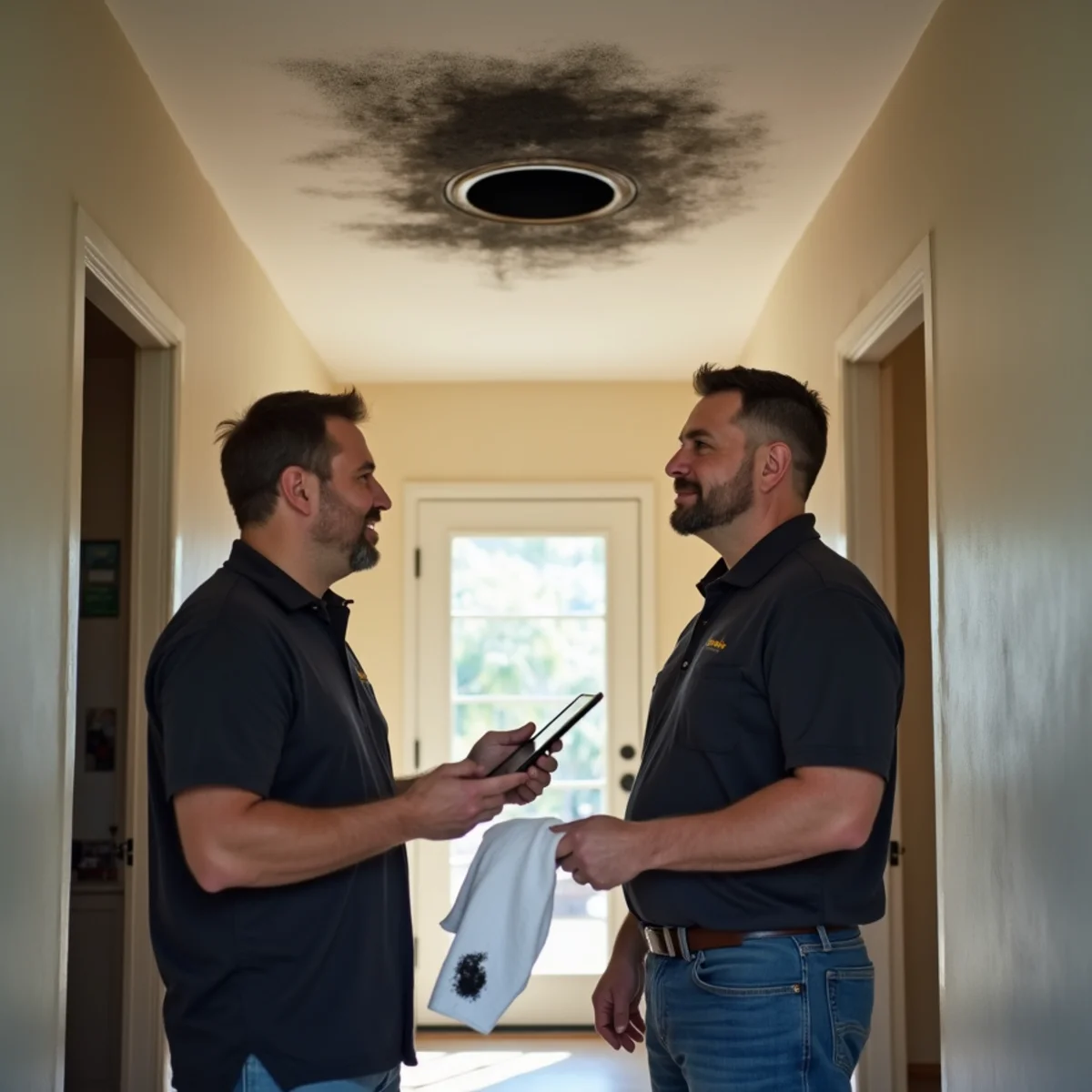
Wet materials left closed up can grow mold, and wet soot is harder to clean than dry soot. Once the building is secure and drying, smoke damage cleanup can begin.
What affects the cost of emergency board-up and tarping
Board-up is usually one of the smallest lines on a fire claim, but it still varies with the building. The price in writing reflects:
- How many openings need covering, and their size: a bedroom window, a sliding door or a full storefront.
- Height and access. Second-story apartment windows and steep or fragile roofs need ladders, harnesses or a lift.
- The roof opening. A small ventilation cut takes one tarp; burn-through across the attic takes several, plus battens and more labor.
- Bracing and security. Inside bracing, a lockable entry and extra fastening on ground-floor openings that face a street or alley.
- Water extraction and drying, which depend on how much hose water went into carpet, insulation and the walls.
- Return visits, such as re-securing a tarp after a Santa Ana wind event or adjusting boards for the adjuster's inspection.
Ask for these as separate lines so your adjuster sees the emergency work clearly. Published planning ranges are in our fire damage restoration cost guide for Orange County.
Your duty to prevent further damage under a homeowners policy
Most California homeowners (HO-3) and renters (HO-4) policies require reasonable steps to protect the property from further damage after a loss. Boarding up windows and tarping a burned roof is the textbook example. Rain through an uncovered hole a week later may not belong to the claim.
Reasonable emergency protection is usually treated as part of the covered loss, but terms vary, so read your policy. Keep the written scope and invoice, before and after photos, and receipts for anything you bought yourself.
You choose the contractor; your insurer cannot require you to use theirs. Only a licensed public adjuster or an attorney can negotiate a claim on your behalf in California.
On the night of the fire, that means you can call the crew you want instead of waiting for the insurer to send one. The rule is 10 CCR 2695.9 in the state's Fair Claims Settlement Practices Regulations: no insurer may insist on a particular repair contractor, and any recommendation must come with written notice that you may pick someone else.
What to keep from the emergency visit
- The original photo and video files with their dates, not just copies sent by text.
- Before and after shots of every boarded opening and the tarped roof.
- The written scope and invoice, plus receipts for anything you bought yourself, such as a padlock or tarp.
- Your claim number on every invoice and scope.
A better picture is never worth stepping back into a room the fire department has not cleared.
Getting the fire incident report: OCFA, Fullerton, Anaheim and Los Angeles County
Your insurer will ask for the fire department's incident report. Four agencies cover the area around Buena Park, so who writes it depends on the city.
| City | Responding agency | Where to ask |
|---|---|---|
| Buena Park, La Palma | Orange County Fire Authority (OCFA) | OCFA's records and public records request process |
| La Mirada, Cerritos, La Habra | Los Angeles County Fire Department (La Habra by contract) | LA County Fire's records office |
| Fullerton | Fullerton Fire Department | The city fire department's records office |
| West and central Anaheim | Anaheim Fire & Rescue | The city fire department's records office |
Ask a crew member for the incident number before the engines leave. If you missed it, the station crew or the agency's records office can tell you how to request the report. It is often not ready in the first days, so tell your adjuster it has been requested and go ahead with board-up.
Crews cover La Palma, about 5 to 10 minutes from Buena Park, La Mirada and Cerritos, about 10 to 15 minutes away, plus Fullerton, La Habra and west Anaheim. See all service areas.
How 24/7 dispatch works: live answer, nearest crew, scope and price before work
- Live answer. A person picks up (831) 303-1192 and asks which openings are broken, whether the roof was cut, whether gas and power are off, and whether the house has been released.
- Nearest available crew. The job goes to the closest independent crew that can take it. Nobody quotes an arrival time they cannot control.
- Scope and price in writing. The crew walks the outside with you, lists each opening, the roof and the water work, and prices it before plywood goes up.
- Photos and handoff. Openings are photographed before and after, and you get a lockable entry and a written record for your adjuster.
Next usually come contents cleaning and pack-out, soot and smoke cleanup, and the rebuild. Every fire restoration crew we send is licensed where California requires it, and insured.
Why Buena Park calls Fire & Water Damage Pros for emergency board-up
Answered at 3 a.m., not on Monday
A person picks up (831) 303-1192 every hour of every day and lines up the nearest available crew. No arrival time is promised that cannot be kept.
Secured, documented and lockable
Every opening is photographed before and after, and you get one padlocked entry for the adjuster and later crews.
The water starts coming out on visit one
Hose water extraction and drying begin with the board-up, before wet drywall and insulation turn into a bigger claim.
You choose who secures your house
You can call the crew you want the night of the fire. The written scope and invoice carry your claim number for the insurer.
Every fire restoration crew we send is licensed where California requires it, and insured.
Emergency Board-Up: common questions from Buena Park
How soon after a fire should a house be boarded up?
As soon as the fire department releases the property, ideally the same night. An open house lets in rain, wind-blown ash and animals, and a vacant fire-damaged home draws trespassers. Insurers also expect reasonable steps to prevent further damage once you can take them.
Can I go back inside to get my belongings?
Only after the fire department says the structure is safe, and only for short trips wearing at least an N95 mask, gloves and closed shoes. Take medications, IDs, phones, keys and a few days of clothing. Leave the rest: belongings are photographed and inventoried before they are moved, which helps your contents claim.
Does insurance pay for emergency board-up?
Reasonable board-up, tarping and water extraction are usually treated as part of a covered fire loss, because the policy asks you to protect the property. Terms vary, so check your policy and tell your insurer what was done. Keep the written scope, invoice and photos together. No one can promise approval in advance, and we will not.
Are you really available in the middle of the night?
Yes. A person answers the phone 24 hours a day, including weekends and holidays. Which crew comes, and when, depends on who is closest and free at that hour, so the person on the line tells you what to expect instead of promising a time. If the nearest crew is tied up, you hear that on the call.
When does a house need board-up or roof tarping?
Whenever the fire or the fire crew left the building open: broken or removed glass, a forced or burned door, a ventilation hole cut in the roof, or a spot where flames burned through. Any of those lets in weather, trespassers, animals and more ash. If every window, door and the roof are intact and lock, the crew should tell you no board-up is needed.
Emergency Board-Up beyond Buena Park
The same crews cover the cities around Buena Park, 5 to 20 minutes out by I-5, SR-91 and Beach Boulevard. See how emergency board-up works in the housing stock of each city, or view all fire restoration service areas.